
A pineapple rum cocktail is normally a cold thing in a tall glass with a paper umbrella in it. This one is served hot, in a glass mug, out of a saucepan that has been sitting on the lowest burner smelling of cloves and cinnamon for a quarter of an hour. It tastes nothing like the cold version and it is far better company in January.

- One saucepan makes four generous mugs, which is the easiest way to serve a room a hot drink
- The rum goes in off the heat, so you can actually taste it rather than boiling it away
- Whole spices toasted dry for two minutes do most of the work before any liquid goes in
- The broiled pineapple skewer takes three minutes under the broiler and doubles as the snack
- The mulled base keeps five days in the refrigerator, so the drink is a reheat and a pour
- A pineapple rum cocktail scales straight up to a stockpot for twelve without changing a thing
Mulling is something we reserve almost entirely for wine and cider, which is strange, because the technique is just whole spices warmed in liquid and the liquid does not have to be either of those. Pineapple juice turns out to be a very good candidate. It is tart enough to carry clove and allspice without going flat and sweet, it goes a deep amber as it warms, and it holds dark rum the way mulled cider holds bourbon.

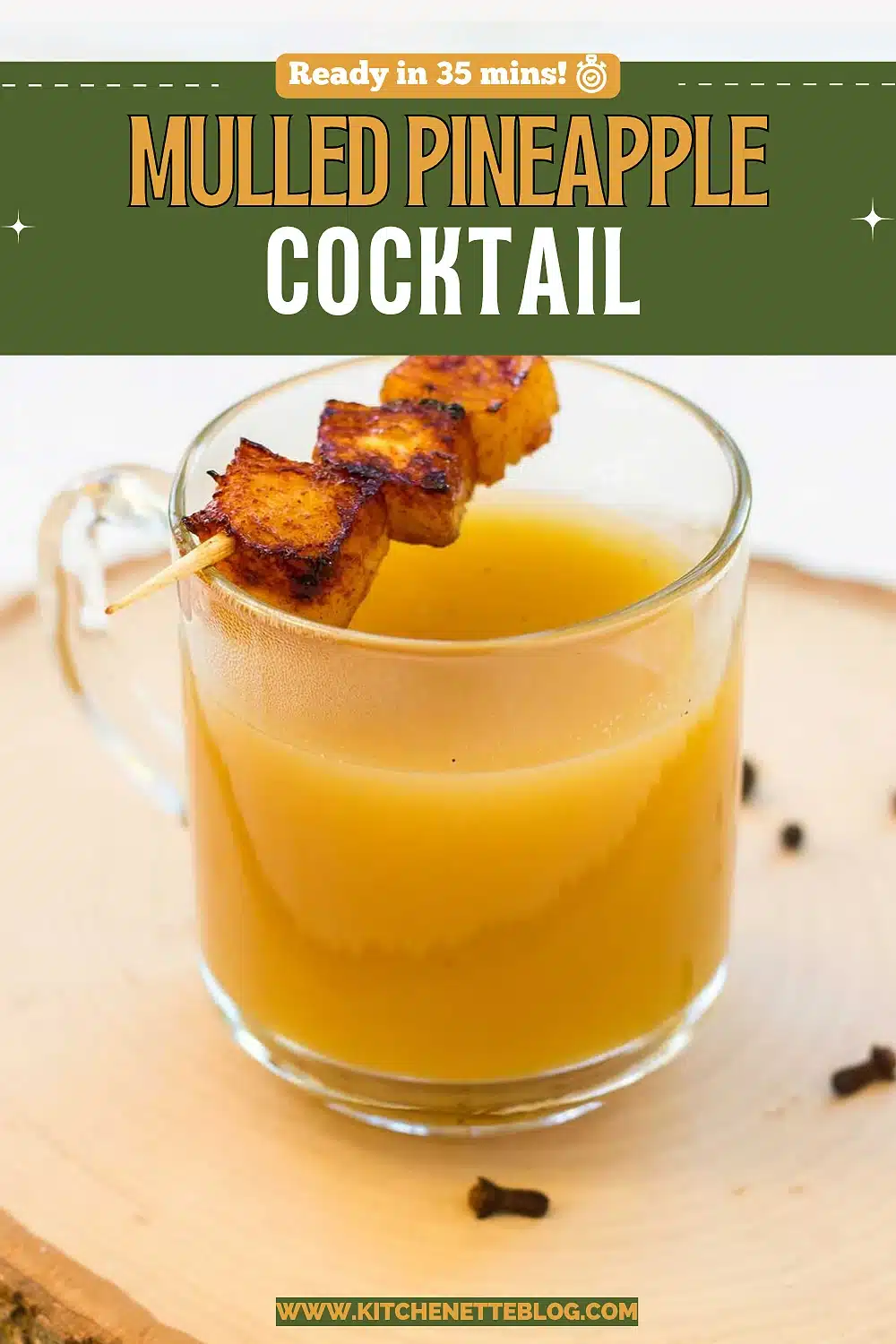

Everything below is about the two halves: the spiced juice, and the skewer that sits across the top.
- What Mulling Does to Pineapple Juice
- Ingredient Notes
- Which Rum and Brandy to Use
- How To Make a Pineapple Rum Cocktail
- The Broiled Pineapple Skewer
- How To Tell When the Pineapple Rum Cocktail Is Ready
- Make It Ahead for a Party
- Storing Pineapple Rum Cocktail
- Variations and Substitutions
- What to Serve with a Pineapple Rum Cocktail
- Pineapple Rum Cocktail FAQ
What Mulling Does to Pineapple Juice
Mulling is not simmering something until it reduces. It is a gentle extraction, and the temperature you hold the pan at decides whether a pineapple rum cocktail tastes of spice or of dust.
Whole spices are toasted first, dry. Two minutes in a warm pan drives the aromatic oils out of the seed coats of allspice and out of the buds of the cloves. Skip this and the same spices need twice as long in the liquid to give up half as much.
The juice is held at 180F to 190F, never boiled. A bare simmer with a few lazy bubbles at the edge is exactly right. A rolling boil strips the top notes and starts concentrating the sugars, and pineapple juice reduced even slightly goes cloying.
Fifteen minutes is the window. Under ten and the clove has not arrived. Past twenty five the peppercorns turn the whole pan bitter and there is no getting it back.
It goes darker as it sits. A pale yellow pan at the start is a deep amber at the end, which is where the drink got its old name.
Then it is strained and the spices are thrown away. Leaving them in a pitcher to look pretty keeps extracting, and by the second glass it tastes of a spice rack.
Save this recipe
Enter your email and I’ll send this recipe straight to your inbox.
Ingredient Notes

A pineapple rum cocktail runs to nine items, and three of them are whole spices you probably already own. Exact amounts are in the recipe card below.
- Pineapple juice: four cups, the plain unsweetened kind from a carton or a can. Do not use a juice blend or anything labeled cocktail, which is mostly sugar water and will make the finished drink taste like candy.
- Dark rum: six ounces. Something with molasses and vanilla to it rather than a light white rum, which disappears completely against the spices.
- Brandy: two ounces. It is here for the grape and the warmth underneath, and it is what separates this from a hot toddy.
- Whole allspice berries: a tablespoon. Allspice is the backbone here and it is mild enough that you can be generous with it.
- Whole cloves: a teaspoon, and no more. Cloves are the most aggressive spice in the pan and a tablespoon of them, which is what the original called for, walks over everything else.
- Black peppercorns: two teaspoons, whole. They give a low heat at the back of the throat that stops the juice reading as a dessert.
- Cinnamon sticks: two, about three inches each. Sticks, not ground, or you get a cloudy pan and grit in the bottom of the mug.
- Vanilla bean: one, split and scraped, or a teaspoon of vanilla bean paste. It rounds the edges off the pepper.
- Fresh pineapple: about ten ounces of peeled flesh for the skewers, plus sugar, Aleppo pepper, cinnamon and salt to coat it.
Which Rum and Brandy to Use
This is the one place where the bottle genuinely changes a pineapple rum cocktail, because the spirits go in at the end and are never cooked.
Aged dark rum is the target. Anything sold as dark, black or aged, in the middle of the shelf rather than at either end. Molasses, vanilla and a little smoke are what you want next to clove.
Spiced rum works and doubles up. It is not wrong, but it is already carrying vanilla and cinnamon, so cut the cloves in the pan to half a teaspoon or the finished mug gets muddy.
White rum is a waste here. It brings alcohol and almost no flavor, and after fifteen minutes of spice it might as well be vodka.
Overproof rum is too much. At 40 percent the drink is already assertive. At 57 percent it stops being warm and starts being a punishment.
For the brandy, an ordinary VS cognac or an American brandy is fine. Applejack is an excellent swap and pushes the whole thing toward cider.
Save the good bottle. A twenty year old rum has subtleties that four cups of spiced juice will flatten completely.
How To Make a Pineapple Rum Cocktail

Read it through first. In a pineapple rum cocktail the skewers and the juice happen at the same time, which is the only reason the whole thing fits inside thirty five minutes.
- First, heat the broiler with a rack about six inches beneath it and line a sheet pan with foil. Pat 10 ounces of pineapple cubes dry, toss them with the 1 tablespoon of sugar, the Aleppo pepper, cinnamon and salt, and spread them out in one layer.
- Next, toast the allspice, peppercorns, cloves and 2 cinnamon sticks dry in a medium saucepan over medium heat for about 2 minutes, until you can smell them from arm’s length.
- Then pour in the 4 cups of pineapple juice with the split vanilla bean and its seeds, bring it barely to a simmer, drop the heat to its lowest setting and hold it there 15 minutes. Broil the pineapple 2 to 4 minutes while it mulls and thread four cubes onto each of four short skewers.
- After that, strain the juice through a fine mesh sieve into a bowl or a clean pan and throw the spices away. Stir in the 1 tablespoon of lemon juice.
- Finally, take the pan off the heat and stir in the 6 ounces of dark rum and the 2 ounces of brandy. Ladle into four heatproof mugs and lay a skewer across each one.
Why the Rum Goes In Last
The Broiled Pineapple Skewer
The skewer on a pineapple rum cocktail is a garnish that is also the snack, and it takes about three minutes of actual attention.
Cut the cubes at three quarters of an inch. Smaller and they dry out under the broiler before the sugar colors. Larger and the middle stays cold and raw.
Pat them dry before the sugar goes on. Fresh pineapple is extremely wet and wet cubes steam rather than caramelize, which is the difference between charred edges and a pale, sad skewer.
Aleppo pepper is the ingredient worth chasing. It is fruity and mild rather than sharply hot. If you have none, a quarter teaspoon of sweet paprika with a pinch of cayenne is a close enough stand-in, which is what the original recipe suggested too.
Two to four minutes, and do not walk away. Sugar under a broiler goes from bubbling to black in about fifteen seconds. Stay at the oven with the door cracked.
Cool them before you thread them. Hot caramelized sugar sticks to fingers and will not let go.
Scrub the pineapple first. The FDA’s guidance on selecting and serving produce safely is to scrub firm produce with a clean brush before cutting, because the knife carries whatever is on the rind straight through into the flesh. A pineapple has a great deal of rind.
How To Tell When the Pineapple Rum Cocktail Is Ready

There is no thermometer moment in a pineapple rum cocktail, but there are four cues and they are all reliable.
The color. The pan starts a flat pale yellow and finishes a clear deep amber. If it still looks like breakfast juice it has not been on long enough.
The smell at the door. Clove and cinnamon should reach you from across the kitchen. That happens at around ten minutes and is the single best signal.
The surface. You want a bubble breaking every second or two and no more. A rolling boil means the burner is too high, and the drink will taste stewed.
The taste, off a cold spoon. Pull a little out, let it cool for thirty seconds and taste it before the rum goes anywhere near it. It should read as spiced and tart, not sweet. If clove is all you can find, strain it now.
Serving temperature is about 150F, which is hot enough to steam and cool enough to drink without wincing. If the pan has been sitting, warm it gently before the rum goes in, never after.
Make It Ahead for a Party
A pineapple rum cocktail is the rare hot drink that is genuinely better prepped in advance, because the base wants to sit.
Mull and strain the juice up to five days early and keep it covered in the refrigerator. The flavor rounds out overnight and the clove stops being so pointed.
Reheat gently in a saucepan to about 160F, then stir the rum and brandy in off the heat, by the mugful or by the batch.
A slow cooker on the warm setting holds the strained base beautifully for a few hours. Add the spirits to each mug as you pour instead, at three quarters of an ounce of rum and a quarter ounce of brandy per serving.
The skewers can be broiled a few hours ahead and left at room temperature. They soften slightly and nobody minds. Do not refrigerate them; cold caramelized pineapple is unpleasant.
To triple it, use a stockpot and keep the mulling time at fifteen minutes. Volume does not change how long extraction takes, only how long it takes to get hot.
Storing Pineapple Rum Cocktail
- Strained base, refrigerated: 5 days in a sealed jar. This is the way to store a pineapple rum cocktail and it is the only one I would plan around.
- Fully mixed with the spirits: 2 days, and it flattens noticeably on the second. Reheat gently and never let it boil.
- Base frozen: 3 months. Freeze it in a wide container, because it expands, and thaw it in the refrigerator overnight.
- Spices left in: never. A pineapple rum cocktail with the whole spices still sitting in it is bitter by the following morning.
- Broiled skewers: 4 hours at room temperature, uncovered. They do not keep overnight in any useful state.
Variations and Substitutions
The base of a pineapple rum cocktail takes interference well as long as the spice load stays roughly where it is.
- Alcohol-free: leave both spirits out and add a tablespoon of apple cider vinegar and an extra tablespoon of lemon juice. You need the acid to replace the bite the rum was providing.
- Bourbon instead of rum: six ounces, and drop the brandy. It pulls the whole thing toward mulled cider.
- Half cider: two cups pineapple juice and two cups unfiltered apple cider, which is a gentler drink and a good one for a crowd that includes people who do not like pineapple.
- Star anise: one whole pod, added with the other spices. Two is too many.
- Fresh ginger: a two inch piece sliced into coins and toasted with the spices, for something brighter and more medicinal in a good way.
- Orange peel: a couple of wide strips taken off with a peeler, no white pith. It is the most useful single addition on this list.
What to Serve with a Pineapple Rum Cocktail
A pineapple rum cocktail is rich and spiced, so the food around it wants to be salty and plain rather than sweet.
- Roasted fennel and white bean crostini, which is the right kind of standing-up food for a mug of something hot.
- Spiced mixed nuts in a bowl on the same table, since they share half the spice rack.
- Sharp cheddar and salted crackers. Nothing soft, nothing sweet.
- A second warm option for people who want one, like a spiced cider cocktail made with bourbon.
If you would rather pour something cold and citrus led alongside it, the blood orange cocktail is the other winter drink on this site that people ask about, and a white Christmas punch covers the crowd that will not touch rum.
Here is what readers ask most often.
Pineapple Rum Cocktail FAQ
Frequently Asked Questions
Does the alcohol cook off?
Some of it does, which is exactly why this version adds the spirits at the end. Ethanol boils at 173F and the mulling pan sits above that, so a spirit simmered for a quarter of an hour loses a serious fraction of both its alcohol and its flavor. Adding six ounces of rum and two ounces of brandy to the strained hot base off the heat keeps a pineapple rum cocktail at roughly the strength of a glass of wine per mug.
Can I make it in a slow cooker?
Yes, and it is the easiest way to do it for a party. Toast the spices in a dry skillet first, because a slow cooker cannot, then tip everything except the spirits in and hold it on low for an hour. Strain it, return the liquid to the pot on warm, and add the rum to each mug as you pour rather than to the whole batch.
How strong is it?
Eight ounces of spirits across four mugs is two ounces each, so a mug of this pineapple rum cocktail lands somewhere near a large glass of wine. Cut it to four ounces of rum and no brandy if it is going to be an afternoon rather than an evening.
Can I use fresh pineapple juice?
You can, and it is very good, but you will need to strain it twice and it foams as it heats. About one large pineapple gives four cups. Carton juice is more consistent and is what the recipe is written around.
More Questions About the Spices and the Skewer
Good to Know
Can I use ground spices instead of whole?
Not really. Ground spice does not strain out, so you get a cloudy, gritty mug and a much harsher extraction, since the surface area is enormous. If it is all you have, use a quarter of the volume, tie it in a coffee filter and pull it out at ten minutes.
Is the peppercorn amount right?
Two teaspoons of whole black peppercorns in four cups of juice is deliberate and you will taste it as a warmth at the back rather than as pepper. The recipe this came from used a full tablespoon, which along with a tablespoon of cloves is a great deal of spice for a drink you are meant to have two of.
What if I do not have skewers?
Sturdy wooden toothpicks hold three cubes each and are what I use most of the time. Failing that, drop two or three broiled cubes straight into each mug and hand out spoons.
Where does this recipe come from?
It began as Liquid Gold from Winter Cocktails by Maria del Mar Sacasa, photographed by Tara Striano and published by Quirk Books in 2013, which arrived here as a review copy. The credit is in the recipe card. The spice quantities have been re-derived and the method has been changed so the rum goes in off the heat rather than being simmered.
A pineapple rum cocktail made this way is about twenty minutes of standing near a saucepan, and it fills a room with clove for the rest of the evening. If you want the cold, sharp end of winter drinking instead, the blood orange cocktail with tequila and ginger beer is waiting.
Mulled Pineapple Rum Cocktail
Save this recipe
Enter your email and I’ll send this recipe straight to your inbox.
Ingredients
Broiled Pineapple Skewers
- 10 ounces fresh pineapple peeled and cut into 16 cubes of about 3/4-inch, roughly a third of a medium pineapple
- 1/2 teaspoon Aleppo pepper or 1/4 teaspoon sweet paprika plus a pinch of cayenne
- 1 tablespoon granulated sugar
- 1/4 teaspoon ground cinnamon
- 1/8 teaspoon fine sea salt
Mulled Pineapple Juice
- 1 tablespoon whole allspice berries
- 2 teaspoons black peppercorns whole
- 1 teaspoon whole cloves
- 2 sticks cinnamon about 3 inches each
- 4 cups unsweetened pineapple juice not a juice blend or a cocktail mixer
- 1 vanilla bean split lengthwise and the seeds scraped out, or 1 teaspoon vanilla bean paste
- 1 tablespoon lemon juice stirred in after straining
To Finish
- 6 ounces aged dark rum
- 2 ounces brandy VS cognac, American brandy or applejack
Instructions
Broil the Pineapple Skewers
- Heat the broiler with an oven rack set about six inches beneath the element and line a rimmed baking sheet with foil.
- Pat the pineapple cubes dry on paper towels, toss them with the sugar, Aleppo pepper, ground cinnamon and salt, and spread them out in a single layer. Wet fruit steams instead of caramelizing, so the drying matters.
- Broil 2 to 4 minutes, until the sugar bubbles and the edges take color. Do not walk away; sugar goes from bubbling to burnt in about fifteen seconds. Cool on the pan, then thread 4 cubes onto each of 4 short skewers or sturdy toothpicks.
Mull the Juice
- Toast the allspice, peppercorns, cloves and cinnamon sticks dry in a medium saucepan over medium heat, stirring, for about 2 minutes, until you can smell them from arm's length.
- Pour in the pineapple juice and add the split vanilla bean along with its scraped seeds. Bring it barely to a simmer, then drop the heat to its lowest setting and hold it at 180F to 190F for 15 minutes. A bubble every second or two is right; a rolling boil strips the aromatics and concentrates the sugar.
- Strain through a fine mesh sieve into a bowl or a clean pan and discard the spices, then stir in the lemon juice. Leaving the whole spices in keeps extracting and turns the drink bitter.
Add the Spirits and Serve
- Take the pan off the heat and stir in the dark rum and the brandy. The base should be around 160F at this point, which lands the finished mug near 150F. Warm it gently before the spirits go in if it has cooled, never after.
- Ladle into 4 heatproof glass mugs and lay a pineapple skewer across the rim of each one.